

Prevalence and Determinants of Erectile Dysfunction in Adult Hypertensives in South East Nigeria
Article Sidebar
Main Article Content
Abstract
Background: Erectile dysfunction (ED) is a recurrent or persistent inability to attain or maintain a strong erection for satisfactory sexual intercourse. It is a common comorbid condition in hypertension due to vascular dysfunctions and the effect of hypertensive therapy. ED, though not a malignant condition, has some significant negative physiological and psychological impact on the man.
Aim: The study was to assess erectile dysfunction and its relationship with family function in adult hypertensive males attending the general outpatient clinic at UNTH Enugu.
Methods: It was a cross-sectional study involving 200 consenting respondents who met the inclusion criteria. The participants were recruited through systematic random sampling. Their socio-demographic and clinical information were collected using semi-structured questionnaires. ED and family function were assessed using the 5-item International Index on Erectile Function (IIEF-5) and family APGAR respectively. Data were entered into the software statistical package (SPSS) version 21.
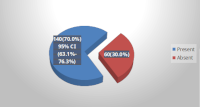
Results: The majority of the participants were above 57 years (59.9%), having a mean age of 60.10 ±10.31years.The prevalence of erectile dysfunction was 70% (95%CI:63.1% -76.3%).The prevalence of mild, mild-moderate, moderate, and severe erectile dysfunction among the respondents were 8.6%, 30.7%, 29.3%, and 31.4% respectively. The significant predictors for erectile dysfunction identified were older age (57 years and above), long duration of hypertension (above 5 years), and use of diuretics.
Conclusion: The findings of this study support existing literatures on the high burden of erectile dysfunction in hypertensive men(i.e. among the study population). It also indicated a strong correlation between older age, use of diuretics, and psychosocial factors, specifically family functioning and the occurrence of ED.
Downloads
Article Details
Section

This work is licensed under a Creative Commons Attribution-NonCommercial-ShareAlike 4.0 International License.
How to Cite




References
Kessler A, Sollie S, Challacombe B, Briggs K, Van Hemelrijck M. The global prevalence of erectile dysfunction: A review. BJU Int. 2019; 124:587–599.
Yafi FA, Jenkins L, Albersen M, Corona G, Isidori AM, Goldfarb S. Erectile dysfunction. Nat Rev Dis Primers. 2016; 2:16003.
Yannas D, Frizza F, Vignozzi L, Giovanni C, Mario M. Erectile dysfunction is a hallmark of cardiovascular disease: Unavoidable matter of fact or opportunity to improve men’s health. J Clin Med.2021; 10 (10): 2221.
Hernandez-Cerda J, Bertomeu-Gonzalez V, Zuazola P, Cordero A. Understanding erectile dysfunction in hypertensive patients: The need for good patient management. Vasc Health Risk Manag. 2020; 16:231-239.
Fafiolu AS, Adebayo AM, Akande TO, Akinboboye OO. Erectile dysfunction among male hypertensive in a tertiary health facility in South-West Nigeria. Global J Health Sci. 2014; 7 (1): 154-160.
Ejike CEC, Eze KC, Okpan CE. Erectile dysfunction and hypertension among adult males in Umudike, Nigeria: A study of prevalence and relationship. AJSR. 2015; 8: 315-323.
Raheem OA, Su JJ, Wilson JR, Hsieh TC. The association of erectile dysfunction and cardiovascular disease: A systematic critical review. Am J Mens health. 2017; 11(3): 552-563.
Odili AN, Chori BS, Danladi B, Nwakile PC, Okoye IC, Abdullahi U et al. Prevalence, Awareness, Treatment and Control of Hypertension in Nigeria: Data from a Nationwide Survey 2017. Glob Heart. 2020; 15(1):47.
Patel RS, Masi S, Taddei S. Understanding the role of genetics in hypertension. Eur Heart J. 2017; 38(29): 2309-2312.
Sangiorgi G, Cereda A, Benedetto D, Bonanni M, Chiricolo G, Cota L. Anatomy, pathophysiology molecular mechanisms and clinical management of erectile dysfunction in patients affected by coronary artery disease: A review. Biomed J. 2021; 9(4):432.
Wang XY, Huang W, Zhang Y. Relation between hypertension and erectile dysfunction a meta-analysis of cross-sectional studies. (An Abstract): Int J Impot Res. 2018; 30: 141-146.
Mc Mahon CG. Erectile dysfunction. Int Med J. 2014; 44(1):18-26.
Chrysant SG. Antihypertensive therapy causes erectile dysfunction. Curr OpinCardiol. 2015; 30: 383–390.
Akinyede AA, Nwaiwu O, Fasipe OJ, Olusanya A, Olayemi SO, Akande B et al. A prospective study of the effects of antihypertensive medications on sexual functions of adult male patients. Future Sci OA. 2020; 6 (6): 479.
Manolis A, Doumas M, Ferri C, Mancia G. Erectile dysfunction and adherence to antihypertensive therapy: focus on beta-blockers. Eur J Int Med. 2020; 81:1-6.
Irekpita E, Lawani U, Alili I, Esezobor E, Salami T. The Burden of erectile dysfunction in hypertensive men attending a general out- patient unit in a rural Nigerian Hospital. East Afr Med J. 2015: 92 (9):448-455.
Ademola CO, Odeigah LO, Alabi KM, Olafimihan KO, Bamidele TO. Physician enquiry of erectile dysfunction among hypertensives in a primary care setting Ilorin, north-central, Nigeria. NJFP. 2019; 10:3.
Grover S, Shouan A. Assessment scales for sexual disorders- A review. J Psych Health. 2020;2(2):121-138.
Bolariwa OA. Sample size estimation for health and social science researchers: The principles and consideration for different study designs. Niger Postgrad. Med J. 2020; 27(2): 67-75.
Li JZ, Maguire TA, Zou KH, Lee JL, Donde SS, Taylor DG. Prevalence, comorbidities and risk factors of erectile dysfunction: Results from a prospective real-world study in the United Kingdom. IJCP.2022; 1:1-10.
Li S, Song J.-M, Zhang K, Zhang C-L. A meta-analysis of erectile dysfunction and alcohol consumption. Urol Int. 2021; 105: 969-985.
Sangiorgi G, Cereda A, Benedetto D, Bonanni M, Chiricolo G, Cota L. Anatomy, pathophysiology molecular mechanisms and clinical management of erectile dysfunction in patients affected by coronary artery disease: A review. Biomed J. 2021; 9(4):432.
Karimi Z, Taheri-Kharameh Z, Sharififard F. Cultural adaptation and psychometric analysis of family APGAR scale in Iranian older people. Korean J Fam Med. 2022; 43(2):141-146.